
Bedtime Stories vs. Screens: What Helps Kids Sleep Better?
It’s the modern bedtime dilemma: one more episode, or one more chapter? The science here is unusually clear — and it strongly favors the chapter.
How screens sabotage sleep
Three mechanisms, all working against your child:
1. Blue light suppresses melatonin. Evening screen light tells the brain “it’s daytime,” delaying the hormonal signal for sleepiness.
2. Content is stimulating. Fast cuts, bright colors, and cliffhangers keep the nervous system activated — the opposite of wind-down.
3. It displaces sleep time. “One more episode” reliably becomes three. The AAP specifically recommends no screens in the hour before bed.
Studies consistently link pre-bed screen use in young children with later bedtimes, shorter sleep, and more night wakings.
Why stories do the opposite
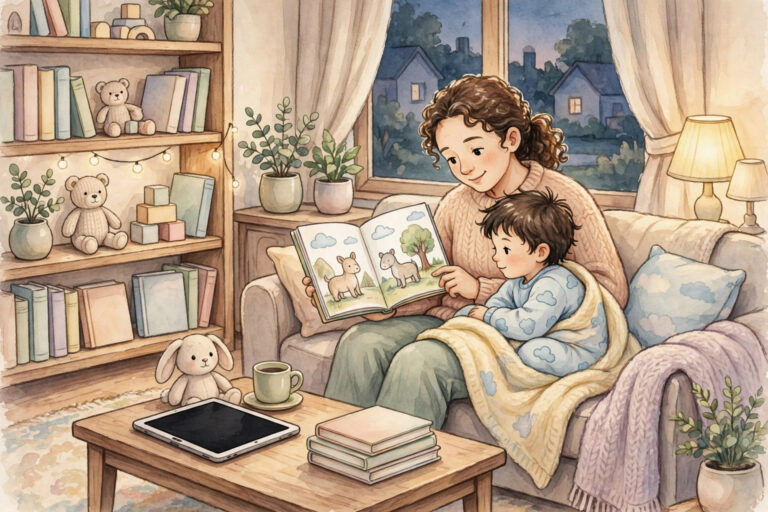
Read-aloud time is practically engineered for sleep:
– Dim, calm setting — you naturally lower lights for a story
– Rhythmic language — the cadence of read-aloud slows breathing
– Connection — physical closeness with a parent lowers cortisol
– Predictable ending — “the end” is a clear sleep cue, unlike autoplay
Research on shared reading also shows it builds vocabulary and bonding while preparing the body for sleep. It’s the rare parenting habit that’s both enriching and soporific.
The simple swap plan
Don’t go cold turkey — replace, don’t just remove:
Week 1: Move the last show 30 minutes earlier; add a 5-minute story after it.
Week 2: Replace the last show entirely with two stories (try Benny the Bear or Luna the Rabbit).
Week 3: Screens off a full hour before bed; stories + song fill the gap.
Expect 2–3 nights of protest. Then watch bedtime get easier — most parents report faster sleep onset within a week.
The bottom line
Screens wire kids up; stories wind them down. Same thirty minutes, opposite results. Choose the story.
Try This Tonight
You don’t need a perfect plan — you need a first step. Here are four concrete things you can do this evening, with zero prep.
1. Set a screen cutoff alarm. One hour before bedtime, set a phone alarm labeled “screens off.” When it rings, the tablet goes on its charger in the kitchen — not the bedroom, not “in five more minutes.” Let the alarm be the bad guy instead of you. Kids argue with parents; they rarely argue with a ringing phone.
2. Build a story nest. Pile two cushions and a soft blanket in the same corner every night, with a dim lamp nearby. Keep it simple and keep it consistent. Within a few nights, just climbing into the nest will start making your child drowsy — that’s the routine doing its job before the story even begins.
3. Pick tomorrow’s story in the morning. At breakfast, let your child choose tonight’s book from two or three calm options. It gives them something to look forward to all day, and it quietly kills the bedtime “but I wanted the OTHER one” negotiation before it starts.
4. Offer the trade, not just the no. When the “one more episode” begging starts, don’t only refuse — trade up: “No more episodes tonight, but you get one EXTRA story.” You’re not taking something away; you’re swapping it for something better. Most kids take that deal.
Mistakes Most Parents Make
1. Going cold turkey. Screens vanish overnight, your child melts down for an hour, and by night three you’re handing the tablet back “just this once.” Cold turkey fails because it asks too much of everyone at once. Replace gradually instead — small steps stick, big leaps snap back.
2. Swapping in a hype-up story. You ditch the show but read a wild adventure full of chase scenes and cliffhangers. Here’s the thing: your child’s brain can’t tell the difference between screen excitement and story excitement. Save the thrilling books for daytime. Bedtime stories should be calm, gentle, and slow.
3. Reading under bright lights with your phone nearby. A blazing overhead light and a buzzing phone undo half the benefit of the story. Dim the lamp, put your phone face-down in another room, and let the whole room feel like sleep is on its way. The setting is part of the medicine.
4. Letting story time sprawl. “One more book” five times turns a 15-minute wind-down into a 45-minute second shift for you. Decide the limit before you start — “two books, then lights out” — and hold it kindly but firmly. A clear, predictable ending is part of what makes stories sleep-friendly in the first place.
Quick Answers
My child only falls asleep to a show. Where do I even start?
Start in the middle, not at the end. Keep the show for now, but move it 30 minutes earlier and add a short story right after it. Over two weeks, the story slides earlier and the show slides out. You’re moving the finish line a little at a time, not yanking it away.
Are audiobooks or sleep podcasts okay at bedtime?
Yes — they’re one of the best middle steps you can use. No glowing screen and no blue light, but the same soothing voice and story rhythm. Plenty of families use a calm audiobook as the bridge between falling asleep to shows and falling asleep quietly.
What if grandparents do screens right up to bedtime?
Have the conversation once, kindly and clearly: “We’re doing screens-off an hour before bed because it helps her fall asleep so much faster.” Frame it as a sleep thing, not a judgment thing. Offer to send a couple of favorite books to their house so the swap is easy for everyone.
Do educational apps count as screens before bed?
For sleep purposes, yes. It’s not about whether the content is “good” — it’s the light plus the stimulation. The hour-before-bed cutoff applies to every glowing screen, learning apps included. A puzzle book or coloring page fills the same slot without fighting your child’s sleepiness.
Your 7-Day Mini Plan
- Day 1: Move the last show 30 minutes earlier. Just notice what time your child actually starts looking sleepy.
- Day 2: Add one short, calm story after the show. Keep it brief — five minutes is plenty.
- Day 3: Flip the order: story comes before the show. This matters more than you’d think — stories start feeling like the main event.
- Day 4: Replace the last show with two stories. Expect some protest tonight; hold steady and stay warm.
- Day 5: Screens off 45 minutes before bed. Fill the gap with a warm bath and a story.
- Day 6: The full hour, screens off. Story nest, dim lamp, same goodnight phrase as always.
- Day 7: The new normal. Notice how much faster bedtime goes — and jot down what worked, so one rough night next week doesn’t unravel the whole thing.
One last note: if your child keeps struggling to fall asleep or stay asleep even with a steady, screen-free routine, mention it to your pediatrician. Persistent sleep trouble deserves a professional look, and there’s no prize for toughing it out alone.