
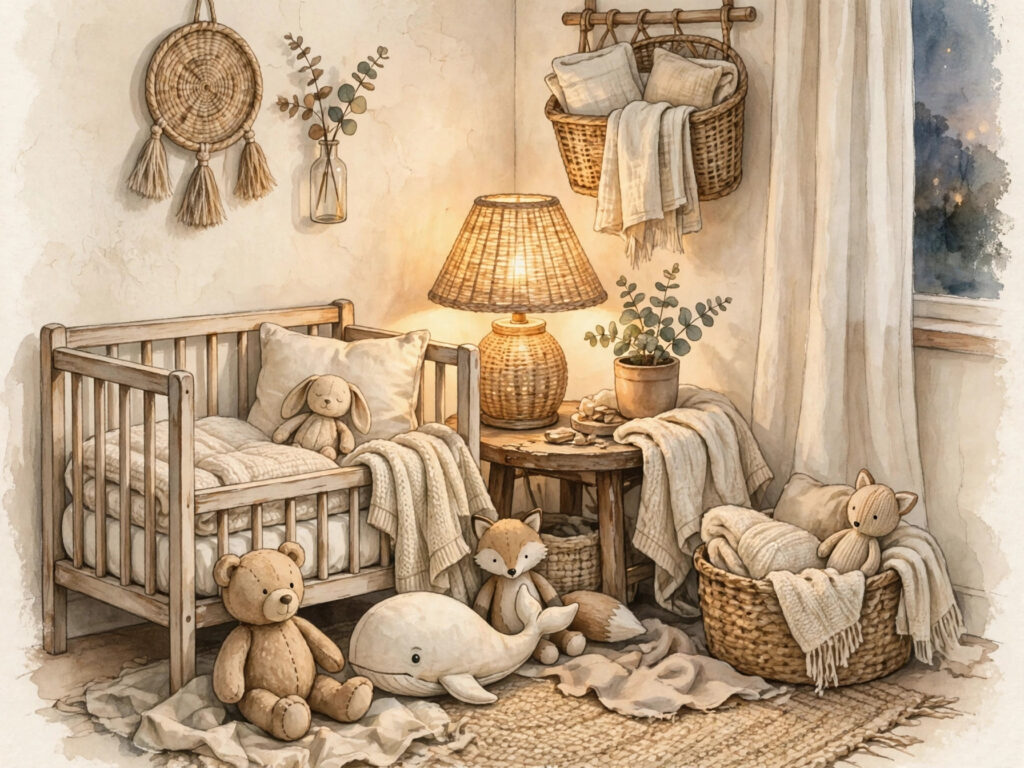
Somewhere between the second trimester and the nesting instinct kicking in, most moms start staring at an empty corner of a room and thinking: this is where the nursery goes. And then the price tags start appearing — the $400 crib, the $200 glider, the bedding sets that cost more than your own duvet — and the dream deflates a little.
Here’s what nobody tells you: babies don’t care about price tags. They care about warmth, closeness, and a calm space. A cozy nursery is built from light, texture, and love — not from a showroom. You can create a beautiful, soothing room for your baby on almost any budget, and this guide will show you exactly how.
Start With Layout: The Only Three Zones You Need
Forget the Pinterest nurseries with seventeen stations. A functional nursery has exactly three zones, and you can arrange them in a room of any size:
- The sleep zone. The crib goes here — ideally against an interior wall, away from windows (drafts and morning light) and away from the door (hallway noise). This is the calmest corner of the room.
- The feeding zone. A comfortable chair with a small table or basket beside it for water, a book, and your phone. This is where you’ll spend hours, so prioritize your comfort over looks.
- The changing zone. A dresser with a changing pad on top does double duty — storage below, changing station above. A small basket for diapers, wipes, and cream keeps everything within arm’s reach.
Walk the triangle: crib to chair to dresser should be a few easy steps, with a clear path for those middle-of-the-night zombie walks. If the room is tiny, the zones can overlap — a chair next to the crib with a basket on the floor works beautifully.
Lighting: The Cheapest Transformation
If you change one thing about the room, change the lighting. Overhead lights are the enemy of a sleepy nursery — they’re harsh, they’re bright, and they wake everyone up.
- A warm dimmable lamp. One floor or table lamp with a warm-white bulb (2700K) and a dimmer — or a smart bulb you can dim from your phone — changes everything. Night feeds under soft amber light keep both of you drowsy.
- A nightlight with a warm glow. Skip the blue-white plug-ins. A small warm nightlight near the changing area gives you enough light to work without fully waking the baby (or yourself).
- Blackout curtains — the budget version. You don’t need custom drapes. Affordable blackout curtains from any big-box store, or even blackout liners hung behind curtains you already own, make daytime naps dramatically easier.
- Fairy lights for magic. A $10 string of warm fairy lights along a shelf or around a mirror adds the cozy glow that makes a nursery feel like a storybook. Keep them out of the crib and out of reach.
Thrift, Reuse, and Repurpose: The Budget Superpowers
The nursery is the perfect room for secondhand and repurposed pieces, because babies outgrow everything so fast. Smart moms let someone else pay full price first.
- The dresser. A sturdy secondhand dresser with a changing pad on top beats a dedicated changing table every time — it lasts for years after the diaper phase. Check thrift stores, marketplace listings, and family hand-me-downs.
- The chair. You do not need a $300 glider. Any comfortable armchair with good back support works. Add a small footstool (or a sturdy ottoman from a thrift store) and you’re set. Many moms prefer a simple rocking chair found secondhand.
- Storage baskets. Baskets hide the beautiful chaos of baby life. Thrift stores always have them, and matching-ish baskets on a shelf look intentional and tidy.
- Art and decor. Frame pages from a beloved children’s book, hang a handmade garland, or print free nursery art at home. A $5 frame from a discount store makes anything look deliberate.
- The rug. A soft rug makes middle-of-the-night standing so much kinder on your feet. Look for washable, low-pile rugs — secondhand is fine if you can clean it well.
One safety note that matters more than any bargain: buy the crib mattress new, and check that any secondhand crib meets current safety standards (slats no more than 2⅜ inches apart, no drop sides, no peeling paint). Some things are worth buying new; the mattress is at the top of that list.
Cozy Textiles: Softness on a Budget
Cozy is a feeling, and it’s created almost entirely by textiles. This is where a small amount of money goes a very long way:
- Layered blankets. A soft throw over the feeding chair, a quilt folded at the foot of the crib (for decoration only — never in the crib with the baby), a knit blanket in a basket. Layers read as cozy instantly.
- Curtains in a soft fabric. Even inexpensive curtains in linen-look fabric soften a room’s edges and absorb sound.
- A washable crib sheet in a pattern you love. This is the one textile the baby actually touches — pick something soft and sweet. Two sheets are enough (one on, one in the wash).
- Cushions with washable covers. Two or three cushions on the chair in warm colors make it the most inviting seat in the house. Washable covers are non-negotiable with a newborn.
Stick to a simple palette — two or three warm, muted colors — and everything will look coordinated even if every piece came from a different store.
Small-Space Tricks (For Nurseries That Are Really Just Corners)
No spare bedroom? You’re in good company. A nursery corner works just as well as a nursery room:
- A mini crib or bassinet fits in a bedroom corner and buys you months before you need a full-size setup.
- Vertical storage — wall shelves and over-the-door organizers — keeps baby supplies off the floor.
- A room divider or curtain can carve a visual “nursery” out of your bedroom, giving the space its own identity.
- One basket per category (diapers, clothes, feeding) keeps a small space functional without furniture.
12 Cozy Ideas at a Glance
- Warm dimmable lamp instead of overhead light
- Blackout curtains (or liners) for better naps
- Secondhand dresser as changing station
- A comfortable thrifted armchair + footstool
- Baskets, baskets, baskets for storage
- Framed book pages as wall art
- String of warm fairy lights on a shelf
- Soft washable rug underfoot
- Layered throws and cushions in warm tones
- A special blanket just for first photos
- A small plant (out of reach) for life and color
- A “first library” shelf with a few beloved books
Quick Answers
How much should I budget for a nursery?
There’s no required number. Many moms create a lovely nursery for the cost of a crib mattress, a few baskets, and some paint — especially using secondhand furniture. Spend where it touches the baby (mattress, sheets) and save everywhere else.
Is a secondhand crib safe?
It can be, if it meets current safety standards: slats close together, no drop-side rail, sturdy hardware, no peeling paint or lead risk. When in doubt, check your country’s current crib safety guidelines before using it.
Do I need a nursery before the baby arrives?
Not a finished one. In the early weeks, the baby will likely sleep in a bassinet in your room. A functional corner with a changing setup and a comfortable chair is plenty to start — you can finish the room later.
What’s the one thing worth splurging on?
A new, firm crib mattress that fits snugly. Everything else can be thrifted, borrowed, or improvised — but the mattress is where your baby sleeps, so make it new and safe.
The most beautiful nurseries aren’t the expensive ones — they’re the ones that feel like a hug. Soft light, warm textures, and a chair where you’ll hold your baby at 3 a.m. and feel the whole world go quiet. That’s the room you’re building, mama, and no price tag can measure it.