
Packing your hospital bag feels like one of those small tasks that somehow carries a mountain of meaning. One minute you’re folding a tiny onesie the size of your hand, and the next you’re wondering how something so small needs so much stuff. Take a breath, mama — this is simpler than it looks.
The truth is, you need less than most checklists tell you. Hospitals provide the big medical essentials, and half the “must-haves” on the internet are things you’ll never touch. What you actually need is a bag that covers three things: your paperwork, your comfort, and your baby’s first hours. Everything else is optional.
This checklist is built for real moms packing real bags — practical, calm, and free of the panic-buying energy. Let’s pack it together.
The Documents and Essentials (Pack These First)
Start here, because these are the only true non-negotiables. Everything else in this list is about comfort — this section is about being prepared.
- Your ID and insurance information. Driver’s license or photo ID, plus your insurance card or policy details. Take a photo of both on your phone as backup, but bring the physical copies too.
- Your birth plan, if you have one. Print two copies — one for your chart, one for your partner to hold. Keep it to one page; nurses appreciate brevity in the moment.
- A list of current medications and allergies. Even if you told your doctor at every appointment, bring a written list. In the rush of labor, you won’t want to rely on memory.
- Your pediatrician’s name and number. The hospital will ask who your baby’s doctor is before discharge. If you haven’t chosen one yet, that’s okay — but try to decide before your due date so it’s one less thing to think about.
- Phone charger — and a long cable. Hospital outlets are never where you want them to be. A 6-foot cable is one of the most genuinely useful things you can pack.
- Cash or a card for incidentals. Parking, vending machines, the gift shop when your partner needs a break — small bills are handy.
Put these in a zippered pouch or a folder at the top of your bag so you’re not digging around when you arrive.
Comfort Items for You (The Part That Actually Matters)
Labor is work, and recovery is tender. The comfort items aren’t luxuries — they’re the things that make you feel like yourself when everything is new and overwhelming.
- A soft robe or loose button-down pajamas. Button-front tops make skin-to-skin and feeding easier, and your own soft clothes feel infinitely better than a hospital gown once you’re up and moving.
- Warm socks or slippers with grip. Hospital floors are cold and slippery. Fuzzy socks with rubber grips are a classic for a reason.
- Lip balm and a hair tie. Two tiny things you’ll reach for constantly. Hospital air is dry, and you’ll want your hair out of your face.
- Your own pillow with a colored pillowcase. Hospital pillows are flat and sad. Bring one from home in a bright or patterned case so it doesn’t get mixed up with hospital linens.
- Snacks for after. Granola bars, dried fruit, crackers — things that won’t spoil. You’ll be hungry at odd hours, and the cafeteria won’t always be open.
- A water bottle with a straw. Sipping through a straw while lying down is a small mercy you’ll be grateful for.
- Toiletries in travel sizes. Toothbrush, toothpaste, deodorant, face wipes, and a hairbrush. That first shower after delivery feels like a rebirth — having your own products makes it better.
- Nursing-friendly tops or a nursing bra. Even if you’re still deciding about feeding plans, comfortable, easy-access tops keep your options open.
A note on going home: pack one comfortable, loose outfit for yourself — something like soft leggings and a tunic. You’ll still look about six months pregnant, and that’s completely normal. Comfort over style, always.
Baby’s First Outfit (and What the Hospital Already Has)
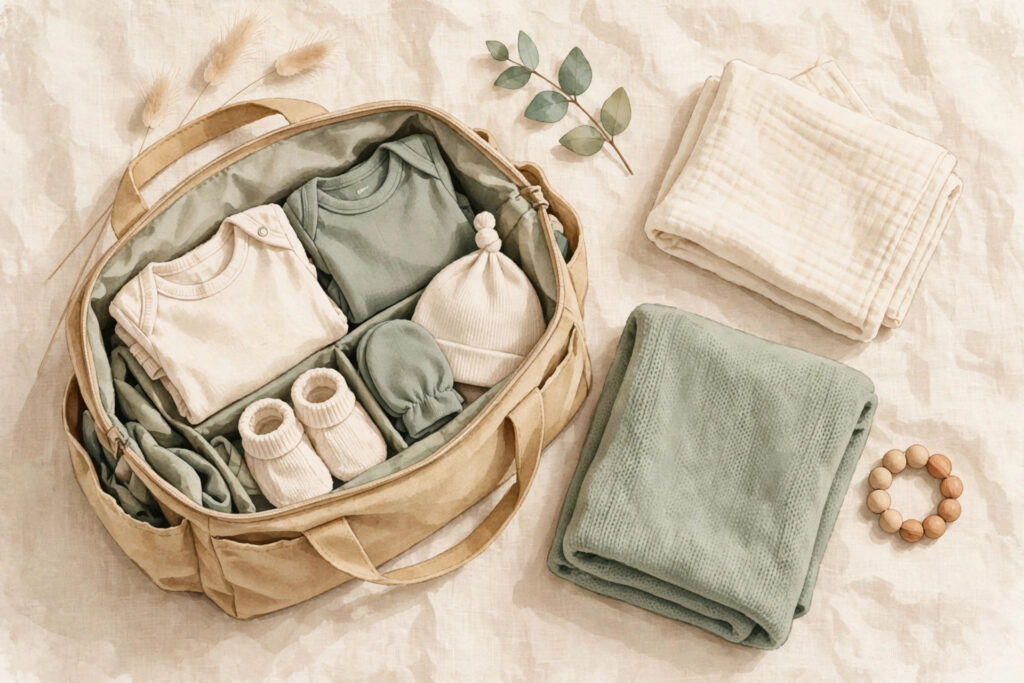
Here’s the secret most checklists bury: the hospital provides almost everything your baby needs during your stay — diapers, wipes, swaddle blankets, hats, and those tiny shirts. You don’t need to pack a full baby wardrobe.
- One going-home outfit in newborn size — plus one in 0-3 months. Babies surprise everyone with their size. A simple onesie and a soft sleeper are perfect; skip anything with complicated snaps when you’re exhausted.
- A warm layer for the car ride. A soft blanket or a light bunting, depending on the season. The car seat is the real requirement — have it installed and inspected a few weeks before your due date.
- A special swaddle or blanket, if you want one. Not required, but many moms love having one beautiful blanket for first photos.
That’s genuinely it for the baby. Save your energy (and your bag space) for yourself.
What to Skip (Save Your Money and Your Bag Space)
The baby industry wants you to believe you need everything. You don’t. Leave these at home:
- Full-size towels and pillows for the whole family. One pillow for you is plenty.
- Diapers and wipes for the hospital stay. Provided. Bring none.
- Books and elaborate entertainment. You’ll have a newborn. Your phone and charger are enough.
- Expensive jewelry or valuables. Leave them home — one less thing to worry about.
- A breast pump. The hospital has them if you need one, and the lactation team will help you.
- Five outfits “just in case.” Two for you (one to wear in, one to go home in) is honestly enough for most stays.
Don’t Forget Your Partner’s Bag
Your partner or support person needs a small bag too — a hungry, phone-dead, uncomfortable partner can’t support you well. Their list is short:
- Change of clothes and basic toiletries
- Phone charger
- Snacks and a refillable water bottle
- A light jacket or blanket (labor rooms run cold)
- Any medications they take
- A small amount of cash
When to Pack (A Simple Timeline)
The sweet spot for packing is around week 35 or 36 — early enough that you’re not doing it between contractions, late enough that seasonal clothes still make sense. If you’re having twins or your doctor mentions early delivery as a possibility, aim for week 32 instead.
Keep the bag by the door or in the car trunk from week 37 on. Add the last-minute items (phone charger, glasses, the pillow) to a sticky note on top of the bag so you can grab them on the way out.
Quick Answers
Do I really need to pack diapers?
No. The hospital provides diapers, wipes, and blankets for your entire stay. Save your diaper stash for home.
What size clothes should I bring for the baby?
Bring one newborn-size outfit and one 0-3 month outfit. Babies are gloriously unpredictable in size, and this covers both possibilities.
Can my partner stay overnight?
In most hospitals, yes — there’s usually a chair or pull-out bed for one support person. That’s why their comfort items matter too. Check your hospital’s policy when you tour.
What if I forget something?
Someone you love will happily make a run to the store, or you can send your partner out. Forgetting the fancy nipple cream is not an emergency — the hospital has the basics covered.
You’ve got this, mama. Pack the bag, put it by the door, and then let it go — the bag is ready so you don’t have to think about it again. The most important thing you’re bringing to the hospital isn’t in any bag at all. It’s you.