The ABC Picnic
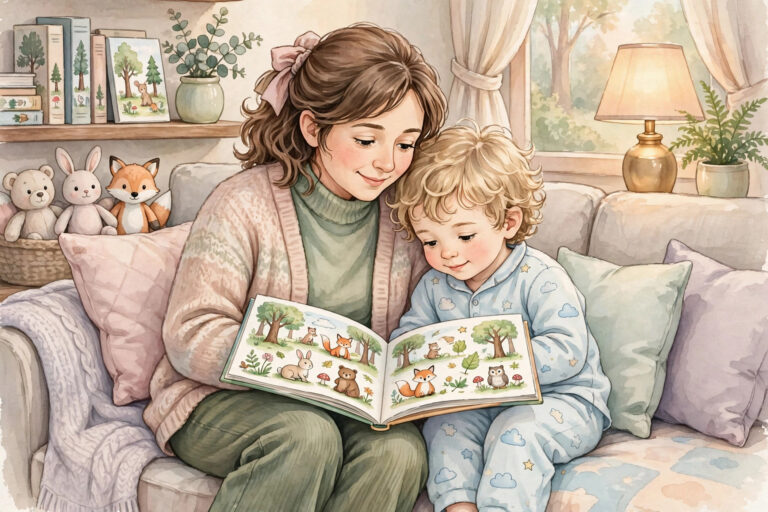
Read-aloud tip for parents: stretch each bolded letter sound as you read (“a-a-apple!”) and let your child shout the sound before you say the word.
Annie Ant was packing a picnic. A perfect, proper picnic!
“A-a-apples!” she said, popping a-a-apples into her basket.
Benny Bear bounced over. “B-b-bananas!” he said, adding b-b-bananas.
Cleo Cat crept in quietly. “C-c-carrots!” she whispered, dropping in c-c-carrots.
Danny Dog dashed up, tongue flopping. “D-d-donuts!” he barked, tossing in d-d-donuts.
Ellie Elephant ambled over, ever so slowly. “E-e-eggs!” she trumpeted, placing e-e-eggs with care.
Freddie Frog hopped in. “F-f-figs!” he croaked, flipping in f-f-figs.
Gigi Goat galloped up. “G-g-grapes!” she giggled, garnishing the basket with g-g-grapes.
Hattie Hippo hurried over. “H-h-honey!” she hooted, heaping in h-h-honey.
Izzy Iguana inched in. “I-i-ice cream!” she announced, icing the pile with i-i-ice cream.
Joey Jaguar jumped in. “J-j-juice!” he joked, juggling in j-j-juice.
Katie Koala climbed down. “K-k-kiwis!” she called, keeping k-k-kiwis cool.
Leo Lion leaped over. “L-l-lemons!” he roared (softly), laying in l-l-lemons.
Milly Mouse marched up. “M-m-muffins!” she mewed, mounting m-m-muffins on top.
Nina Newt nodded. “N-n-noodles!” she noted, nestling in n-n-noodles.
Ollie Owl opened one eye. “O-o-oranges!” he hooted, offering o-o-oranges.
Penny Panda pranced in. “P-p-pears!” she piped, piling p-p-pears high.
Quinn Quail quietly quacked, “Q-q-quiche!” and quickly added q-q-quiche.
Rosie Rabbit raced over. “R-r-raspberries!” she rhymed, rolling in r-r-raspberries.
Sammy Snake slithered in. “S-s-strawberries!” he hissed, sliding s-s-strawberries aboard.
Tilly Turtle took her time. “T-t-tomatoes!” she said at last, topping the basket with t-t-tomatoes.
Uma Unicorn uttered, “U-u-umbrella fruit!” (Nobody knew what that was, but it sounded delicious.) In went the u-u-umbrella fruit.
Vicky Vulture veered down. “V-v-veggies!” she vowed, vaulting v-v-veggies inside.
Wally Walrus waddled up. “W-w-watermelon!” he warbled, wedging in w-w-watermelon.
Xena X-ray Fish (she was very unusual) xeroxed… well, she brought x-x-xylophone crackers. Close enough!
Yara Yak yodeled, “Y-y-yogurt!” and yipped y-y-yogurt into the mix.
Zed Zebra zigzagged in last. “Z-z-zucchini!” he zizzed, zipping z-z-zucchini on top.
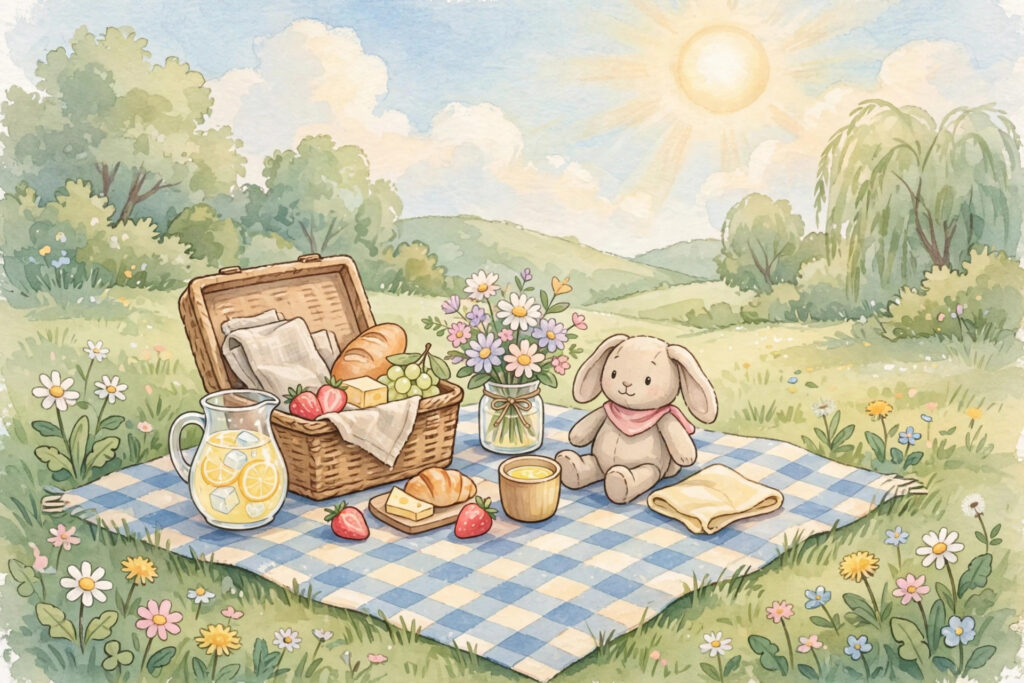
Annie Ant looked at the mountainous basket. “It’s the alphabet picnic!” she cheered.
And they ate, and laughed, and shared — from a-a-apples to z-z-zucchini — until the sun went down.
The end!
—
For parents: After reading, play “pack the picnic” — name a sound and have your child find something in the room that starts with it. For more sound play, try our 10 phonics games.
Try This Today
The story plants the sounds — these activities help them grow. Try one today, right after reading.
1. Picnic Basket Replay. Grab a real basket or bag and “re-pack the picnic” with three letters from the story. Say “B-b-bananas!” and have your child find something in the room starting with /b/ to toss in. Real objects plus the story’s silly phrases make the sounds unforgettable.
2. Sound Snack Hunt. Open the fridge or pantry together and hunt for snacks starting with one letter sound: “Find me something that starts with m-m-m!” Milk! Muffins! (Messes optional but likely.) Eating the evidence afterward is strongly encouraged.
3. Letter Sound Parade. Pick one letter and march around the house chanting its sound: “S-s-s-s-s!” Add instruments — pots and spoons count. Marching and chanting together wires the sound into wiggly bodies. Movement plus sound is a memory superpower.
4. Bedtime Echo. Re-read just three favorite pages tonight. This time, pause before each bolded sound and let your child shout it first: “A-a-…” — “APPLES!” Ending the day as the expert feels wonderful, and repetition is exactly what young brains need.
Mistakes Most Parents Make
Mistake 1: Teaching letter names instead of sounds. “This is Bee” feels natural, but reading runs on sounds, not names — /b/ is what your child needs to build words. Do this instead: lead with the sound (“b-b-bear!”) and let the name come later. The story above is built for sounds; follow its lead.
Mistake 2: Rushing through the whole alphabet. Twenty-six letters in one week is a blur. Do this instead: linger on a few letters at a time. Three letters truly known beat twenty-six vaguely met. The picnic will still be there next week.
Mistake 3: Reading the stretched sounds too fast. It’s tempting to rush past “a-a-apples” to get to the story — but those stretched sounds ARE the lesson. Do this instead: slow down and ham it up. The sillier and stretchier, the stickier.
Mistake 4: Quizzing right after storytime. “Okay, what sound does F make?!” turns a cozy story into a test. Do this instead: keep storytime pressure-free. The games above do the checking for you — joyfully, and without anyone noticing.
Quick Answers
How many letter sounds should my preschooler know? Any number is a good number. Some four-year-olds know a handful, some know them all — both are completely fine. Progress matters, not totals. Celebrate each new sound like the victory it is.
My child mixes up b and d (or p and q). Is that normal? Very. Those letters are mirror images, and young eyes genuinely can’t tell them apart yet. Try this: trace big b’s and d’s in shaving cream or sand while saying the sound — feeling the shape helps the brain file them separately. It resolves with time and touch.
Uppercase or lowercase first? Lowercase. Books, signs, and everyday print are mostly lowercase, so those are the shapes your child needs to recognize while reading. Capitals can come second — they’re easier anyway.
My child only wants the same few pages. Should I push ahead? Don’t. Re-reading favorites is one of the best things a young learner can do — each repeat deepens the sound memory. Let them lead. When they’re ready for new letters, they’ll turn the page themselves.
Your 7-Day Mini Plan
Three letters a week is a perfect pace. Here’s a gentle week built around the picnic.
- Day 1 — Read the story. Stretch every sound; let your child shout them.
- Day 2 — Picnic Basket Replay. Re-pack with real objects for A, B, and C.
- Day 3 — Sound Snack Hunt. Hunt the fridge for m-m-m sounds.
- Day 4 — Letter Sound Parade. March and chant one favorite sound.
- Day 5 — Re-read favorites. Only the pages your child picks.
- Day 6 — Pack the picnic. Name a sound; your child finds a matching object.
- Day 7 — Bedtime Echo. Your child leads the sounds on three pages.