How to Teach Your Child to Read Aloud: A Parent’s Step-by-Step Guide
Watching your child read their first word is pure magic. The good news: you don’t need a teaching degree or expensive programs. With short, playful daily practice, most parents can guide their 4–6-year-old from letter sounds to simple books. Here’s how.
First: is your child ready?
Look for these signs (usually around ages 4–5):
– Knows most letter names and some letter sounds
– Enjoys rhyming games and silly wordplay
– Can clap syllables in words
– Shows interest in print — asks “what does that say?”
– Can sit for a 5–10 minute focused activity
No rush if they’re not there yet. Pushing too early backfires; readiness matters more than age.
Step 1: Master letter sounds (not names)
Teach the sounds letters make, not their names — sounds are what reading uses. Start with a handful of high-utility consonants and short vowels: s, a, t, p, i, n, m, d. Use our phonics games to make this playful. Two or three new sounds a week is plenty.
Step 2: Blend sounds into words
This is the big leap. Start with two- and three-letter words using known sounds: s-a-t → sat, p-i-n → pin. Model it slowly — “ssss-aaaa-t… sat!” — then let your child try. Celebrate every attempt; blending clicks suddenly, like a light switching on.
Step 3: Introduce a few sight words
Some common words (the, and, said, you) can’t be sounded out easily. Teach 2–3 at a time through games — see our sight word activities — and point them out in books.
Step 4: Read decodable books together
Move to simple books built from sounds your child knows. Take turns: you read a page, they read a page. Keep sessions to 10–15 minutes and always end on a success.
Step 5: Read real books, daily
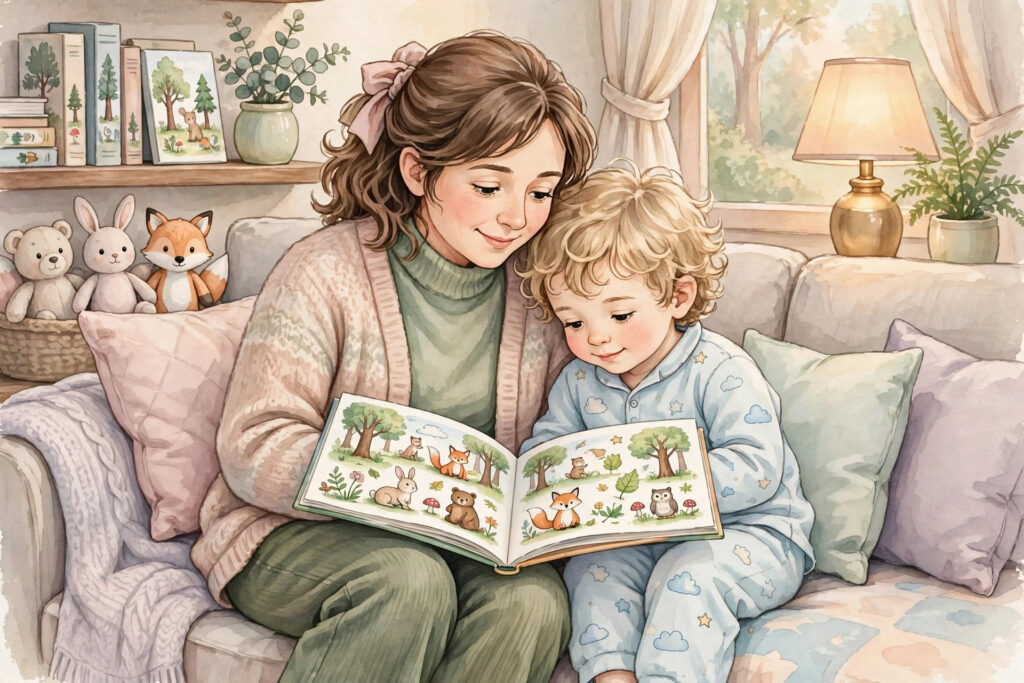
Once blending is solid, read real picture books together every day. Let your child read the words they can; you fill in the rest. This is where fluency and love of reading grow.
Common mistakes to avoid
– Teaching letter names first. Names don’t help decode words; sounds do.
– Long sessions. Ten happy minutes beats thirty miserable ones.
– Correcting every error. If they read “house” for “home” but the meaning holds, let it go sometimes. Protect the joy.
– Comparing to other kids. Reading timelines vary enormously; steady play-based practice wins.
Book picks for brand-new readers
– Bob Books (Sets 1–2) — the classic first decodables
– Elephant and Piggie by Mo Willems — funny, simple, irresistible
– Any book your child loves — motivation is the best curriculum
Read together every day, keep it playful, and trust the process. That first “I read it myself!” moment is coming.
Try This Today
Reading lessons don’t need a curriculum — they need ten playful minutes. Start with one of these today.
1. Echo Reading. Open a favorite picture book and read one sentence aloud, running your finger under the words. Your child echoes the same sentence back, also pointing at each word. You carry the hard work; they practice tracking print and hearing fluent reading. Two pages is plenty for day one.
2. The One-Page Win. Let your child “read” just one page — even if that means reciting it from memory, or reading only the words they know while you fill in the rest. Ending after one successful page teaches them that reading feels good. You can always do “just one more” tomorrow.
3. Word Detective. Pick one word your child knows — the, and, or their name — and hunt for it on every page of tonight’s bedtime book. They point; you celebrate each find like a treasure discovered. This builds the crucial habit of looking closely at print.
4. Record and Replay. Record your child reading (or echo-reading) a page on your phone, then play it back. Kids are amazed to hear themselves “reading like a grown-up,” and most ask to record again — which means more practice without anyone calling it practice.
Mistakes Most Parents Make
Mistake 1: Reading FOR your child instead of WITH them. It’s faster to just read the page yourself — but then your child is listening, not reading. Do this instead: share the work. You read the hard parts, they read the words they know, and you take turns. Participation is where learning lives.
Mistake 2: Starting with books that are too hard. A book full of unknown words teaches one lesson: reading is miserable. Do this instead: choose books where your child already knows most of the words or patterns. Success builds readers; struggle builds avoiders.
Mistake 3: Never re-reading. Parents get bored of the same book, but repetition is how fluency grows — the fifth read is smoother, faster, and more confident than the first. Do this instead: embrace the forty-seventh reading of that favorite book. Every repeat is practice.
Mistake 4: Practicing only at bedtime when everyone’s tired. A sleepy brain doesn’t learn well, and a cranky session poisons tomorrow’s. Do this instead: do your ten minutes when your child is fresh — after breakfast, after outdoor play. Keep bedtime reading purely for pleasure.
Quick Answers
How long until my child reads on their own? Longer than you hope, sooner than you fear — most children need many months of playful practice to move from sounds to independent reading. Timelines vary enormously, and that’s normal. Steady, joyful ten-minute sessions beat any crash course.
My child guesses words instead of sounding them out. Is that bad? Guessing from pictures or context is a natural stage, not a character flaw. Gently redirect: “Good thinking! Let’s check the letters to be sure.” Cover the picture with your hand for a moment if needed. Over time, checking the letters becomes the habit.
Do I need to buy a reading program? No. Programs can help some families, but they’re not required — short daily practice with real books, letter-sound games, and read-aloud time does the job for most children. Save your money for books your child loves.
What if my child loses interest completely? Pause the “lessons” without guilt. Keep reading aloud to them every day — that’s still building vocabulary and print love. Try again in a few weeks with a new book or game. Interest returns; pressure delays it.
Your 7-Day Mini Plan
Ten minutes a day, always ending on a success.
- Day 1 — Echo Reading. Two pages: you lead, they echo.
- Day 2 — Word Detective. Hunt one known word through a bedtime book.
- Day 3 — The One-Page Win. They read one page; you do the rest.
- Day 4 — Record and Replay. Record a page, play it back, celebrate.
- Day 5 — Take turns. Alternate pages of a simple book.
- Day 6 — Re-read a favorite. Notice how much smoother it sounds.
- Day 7 — Show-off reading. Your child reads for a grandparent or a stuffed-animal audience.